This Week in Miru: Safer Team Offboarding, Smarter Reminders, and Invoice Workflow Cleanup
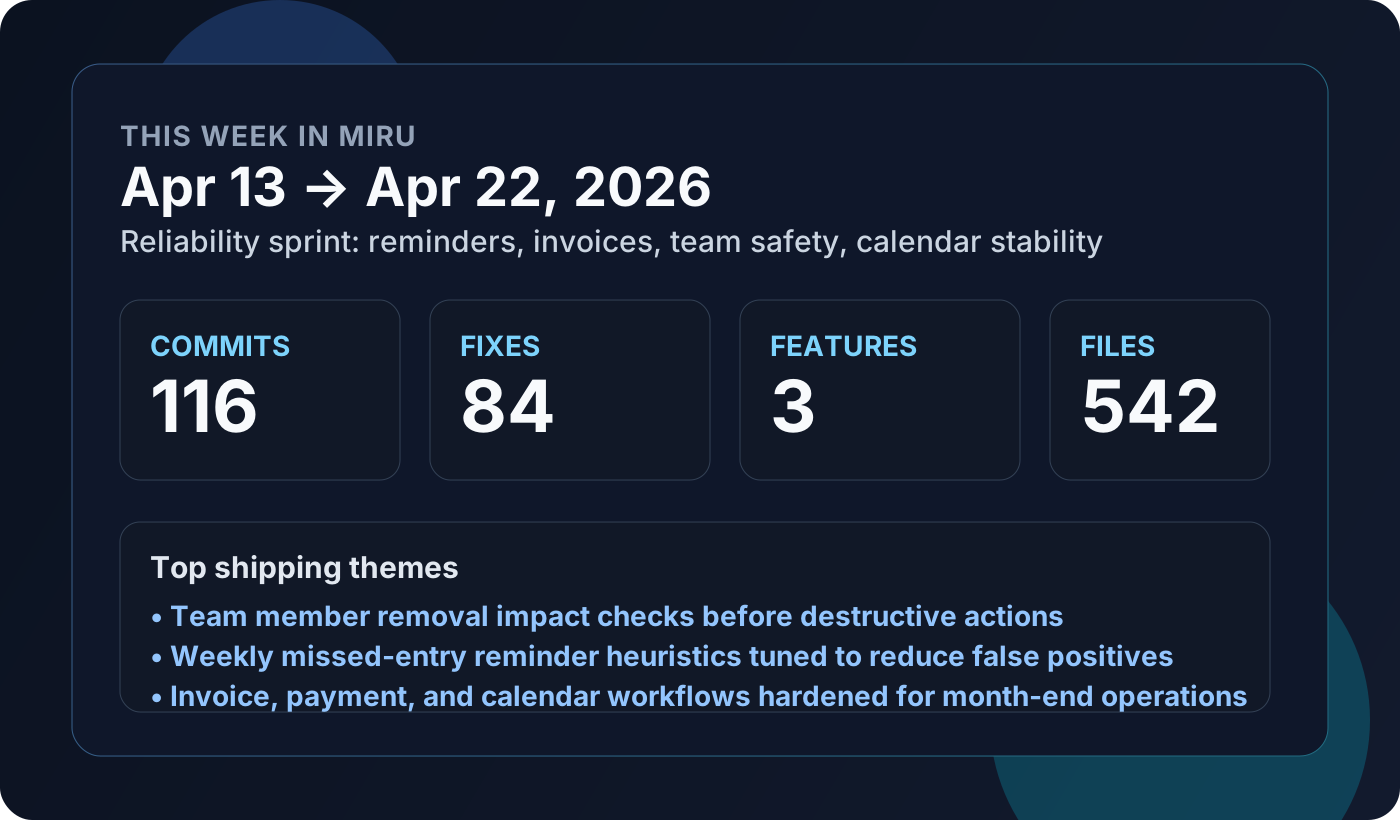
From April 13 to April 22, we shipped 116 non-merge commits across reminders, invoicing, team management, calendars, i18n, and auth hardening.
 Vipul A M · · 3 min read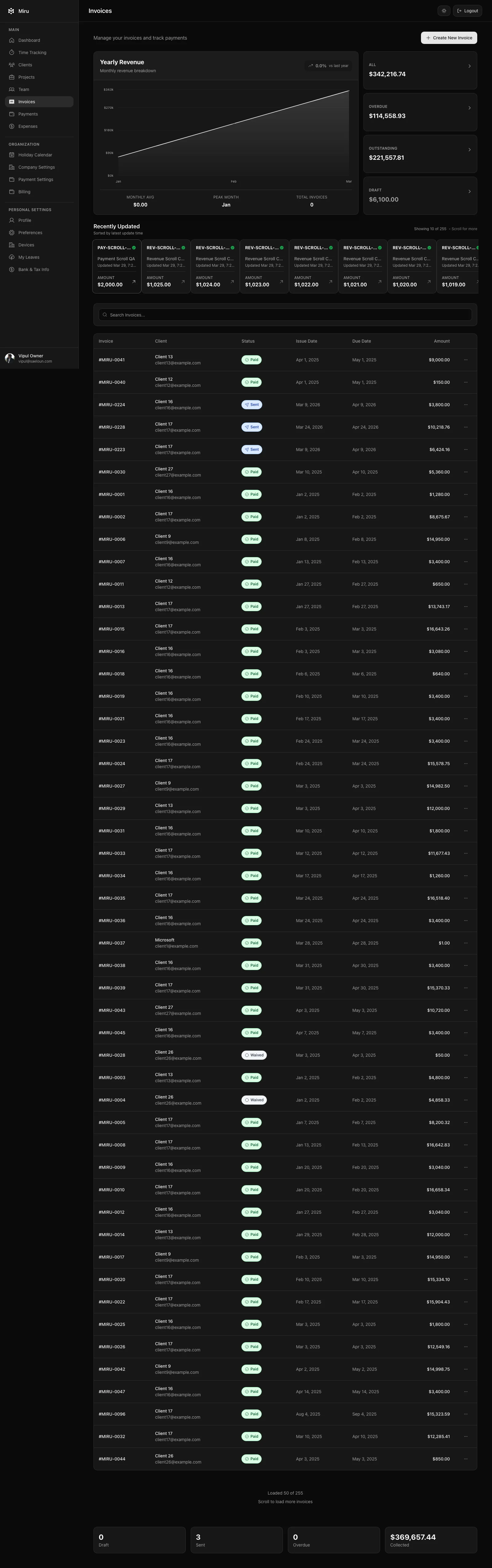
This week: reliability — fewer billing mistakes, fewer accidental removals, fewer surprises.
Between April 13 and April 22, we shipped 116 non-merge commits in miru-web, touching reminders, invoicing, team flows, calendar behavior, localization, and deployment resilience.
1) Team Offboarding Is Now Risk-Aware
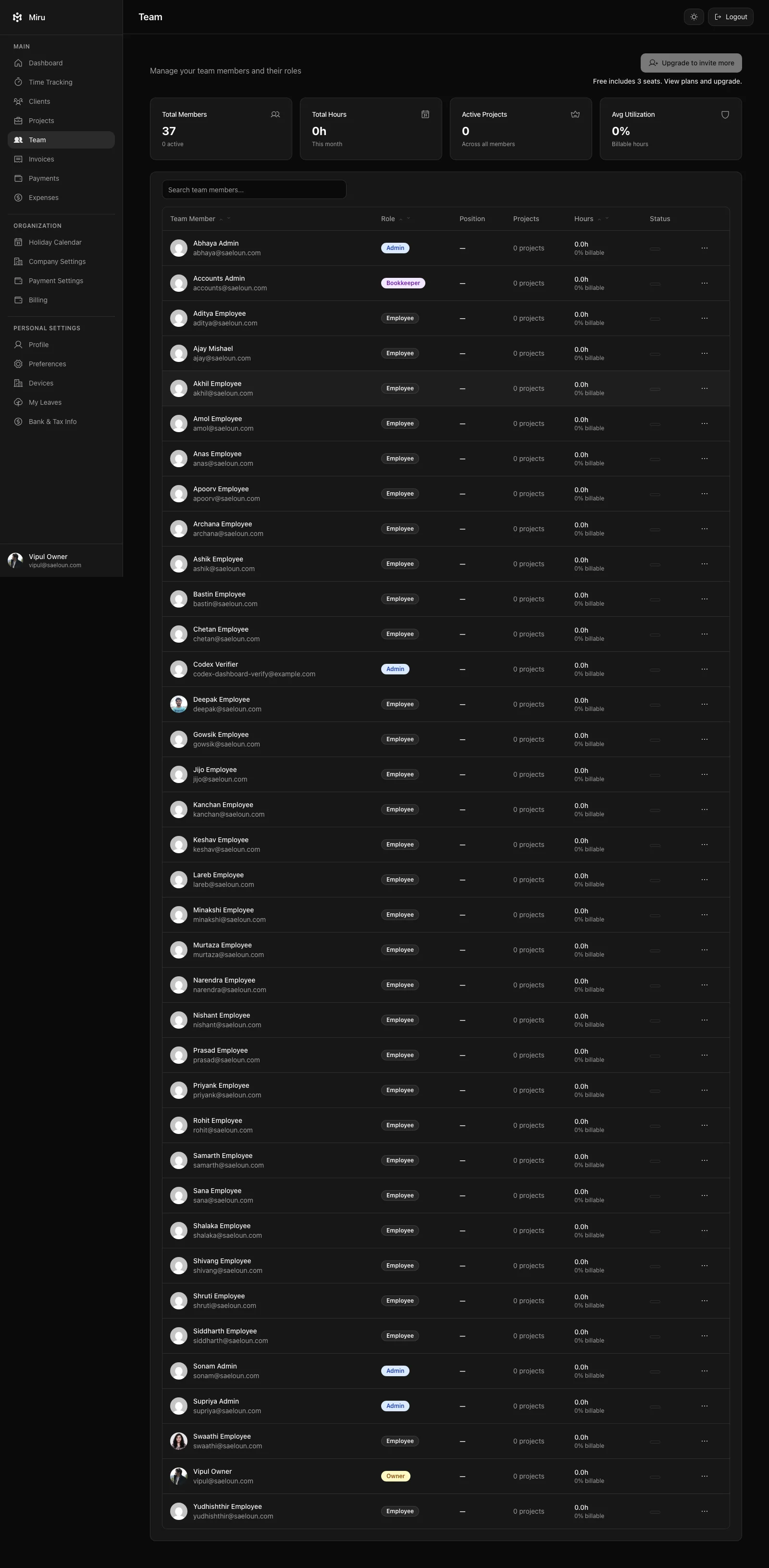
Removing a team member used to be a blind action.
Old flow:
DELETE /api/team/:idNew flow:
GET /api/team/:id/removal_impact
DELETE /api/team/:id
The new removalImpact payload includes practical risk signals:
projectAssignmentsCountprojectNamesunbilledEntriesCountunbilledMinutesuninvoicedAmountinvoicedEntriesCounthasRisk
What changed in practice:
- API now returns removal risk before delete
- UI can show a one-line warning when
hasRiskistrue - Managers can see project impact and uninvoiced amount before final action
Suggested warning copy:
Removing this member will orphan X minutes across Y projects and leave $Z uninvoiced.This is a small API change with a high operational payoff.
2) Weekly Missed-Entry Reminders Stopped Crying Wolf
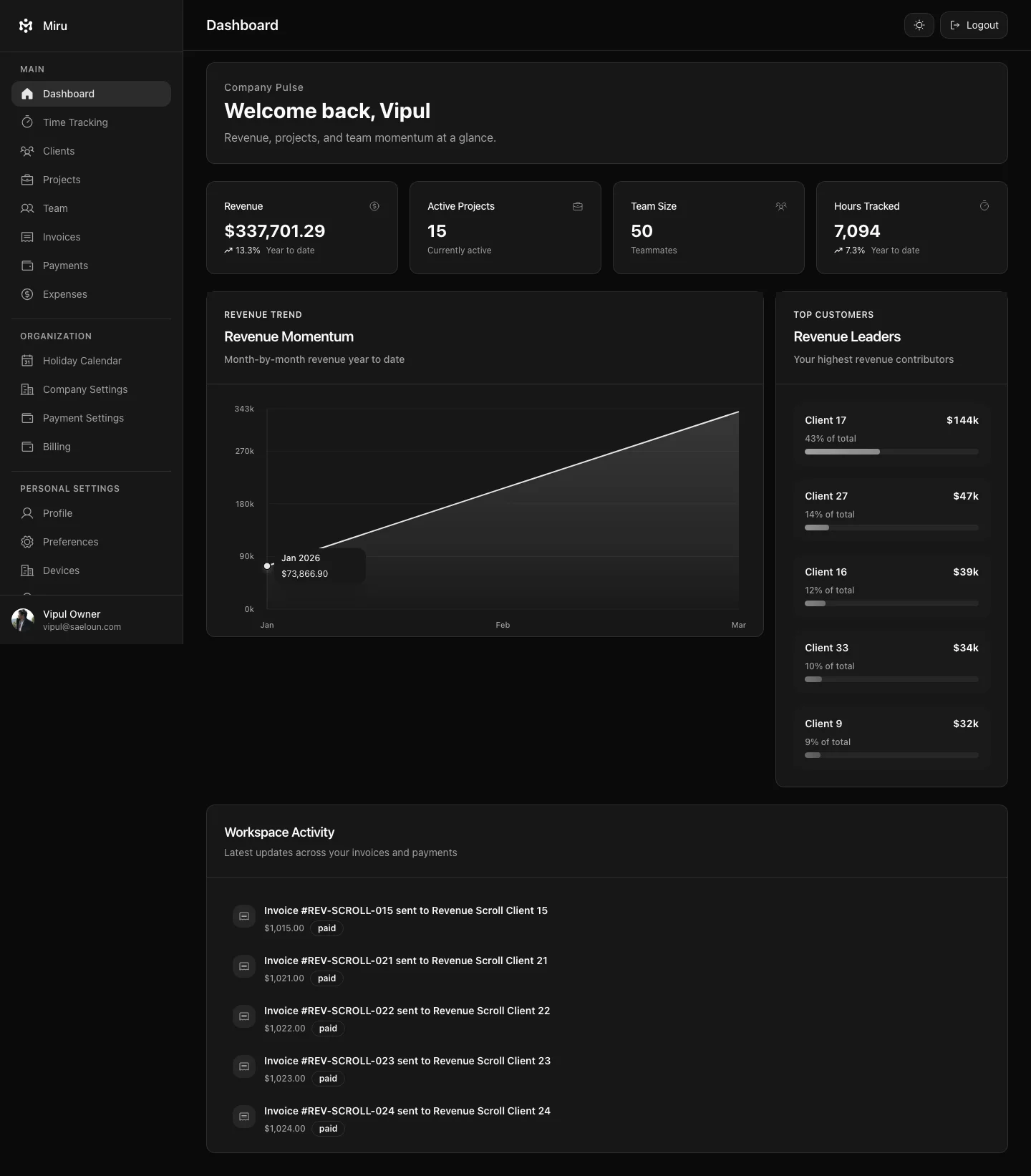
We fixed a class of false weekly reminder emails by tightening duration heuristics and hour-vs-minute detection.
Old logic leaned on entry counts and broad thresholds. New logic inspects real duration characteristics and guards against minute-granularity misreads.
Old shape:
entries_count <= working_days + 2 &&
  timesheet_entries.all? { |entry| entry.duration.to_f <= 24 } &&
  total <= company.working_hours.to_f * 1.5
New shape:
return false if max_duration > 24
return false if total > company.working_hours.to_f * 2
return false if minute_granularity_durations?(durations)

durations.any? { |duration| (duration % 1).positive? } || max_duration <= 12
Result: fewer false reminders, better trust in automation.
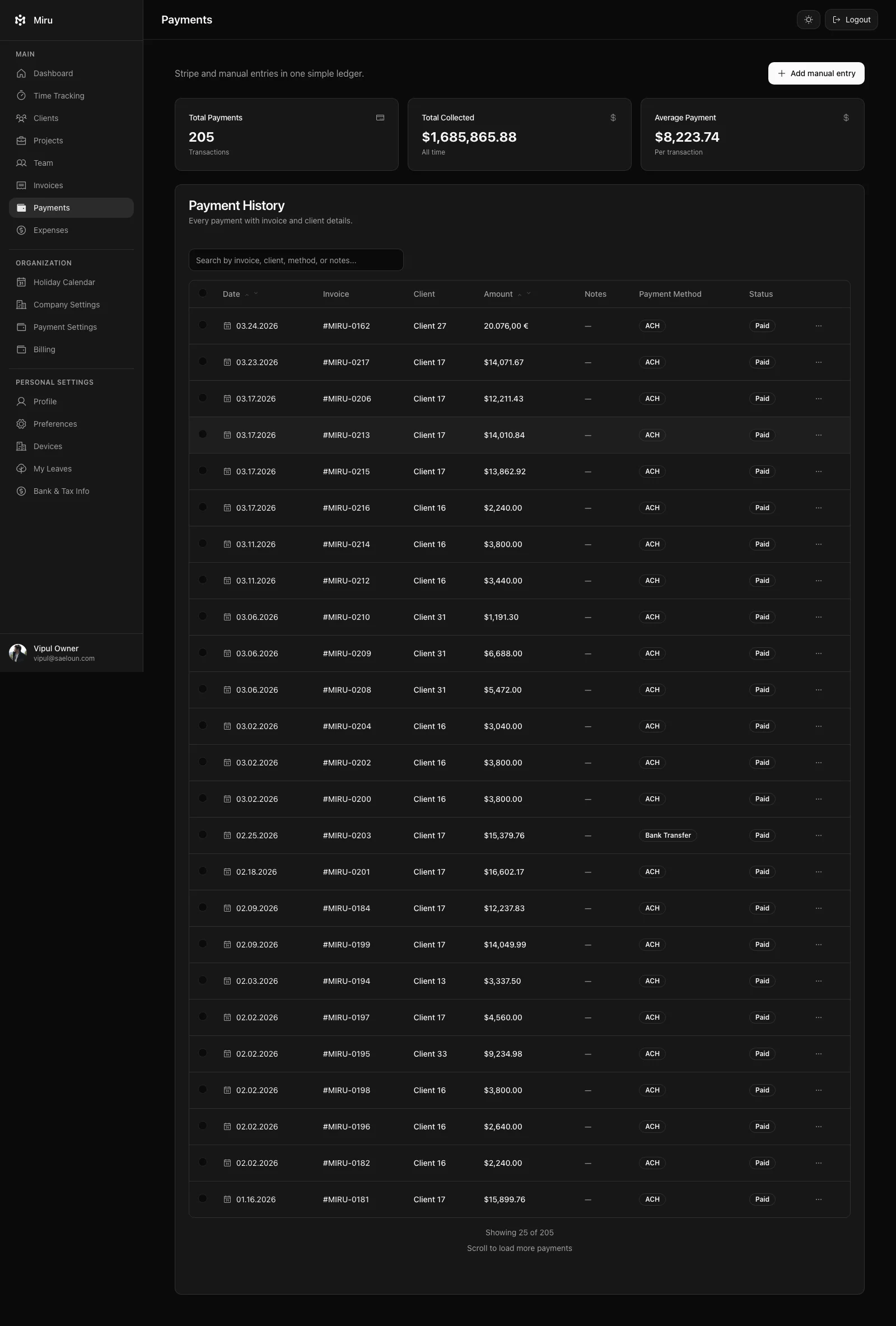
3) Invoice and Payment Flows Got Tighter
We made the invoice experience less fragile and more obvious:
- Added waive-off invoice action in the modern invoice UI
- Moved invoice summary stats above the table
- Added sort indicator on issue date column
- Polished invoice editor + print flow
- Fixed manual line item name usability
- Normalized invoice date/calendar classes
- Improved mark-as-paid modal behavior and styling
This is not glamorous work. It is the work that prevents month-end billing drama.
4) Calendar and Date Picker Bugs Were Systematically Removed
Date/time components were causing inconsistent behavior across leaves, invoices, and time tracking.
We shipped a concentrated pass across:
calendar.tsx- date picker and date range picker components
- leave calendar navigation/selection styling
- holiday calendar layout and sorting
If you felt “calendar weirdness” last week, that was real. It is better now.
5) Team and Client Data Flows Are More Defensive
A few fixes worth calling out:
- Team index now includes hours + project metrics consistently
- Team status mapping now tolerates boolean/string compatibility (
status+statusTextpaths) - Client create no longer allows blank-email flows to throw a 500
- Add-client form now marks required fields clearly
These are small changes in code and big changes in operational confidence.
6) i18n, Auth Recovery, and Docs Delivery Improved Together
We continued the localization sweep across settings, reports, clients, and payments, while also hardening deploy/session behavior and profile/auth flows.
Highlights:
- Translation backfill across supported locales
- Session recovery across deploy-time asset mismatches
- Bootstrap session recovery hardening
- Avatar upload validation and UX cleanup
- Docs pipeline moved to a more resilient hosted flow (
/docsroute alignment + gh-pages deploy support)
By The Numbers (Apr 13 → Apr 22)
- 116 non-merge commits
- 84 fix commits
- 3 feature commits
- 4 refactors
- 5 test-focused commits
- 542 unique files touched
Changelog Links
If you want the raw diffs:
- Team removal impact warning: d0f66a44
- Reminder false-positive fix: 9394b1bf
- Waive-off invoice action: 27536563
- Calendar/date picker stabilization: a3a164e7
That is the week.
- Try Miru: app.miru.so/signup (2-minute setup)
- Self-host: github.com/saeloun/miru-web (Docker quickstart in README)
Watchlist for Next Week
- Add e2e coverage for
removal_impactwarning paths - Track reminder false-positive reports after heuristic changes
- Monitor invoice print and waive-off flows for month-end regressions
Vipul A M
Co-founder at Saeloun. Building Miru. Rails contributor. Shipping from Pune, India.
Read next
This Week in Miru: QuickBooks in Review, Configurable Timesheets, and Mobile Polish
May 20-June 2: configurable timesheet edit windows, mobile responsive cleanup, analytics alert fixes, dependency patches, and QuickBooks Online sync moving through review.
This Week in Miru: Mobile Beta, Signed Desktop, CLI Invoices, and Safer Billing
Apr 29-May 19: 199 non-merge commits across Miru web, mobile, desktop, and marketing. Mobile beta work, signed desktop builds, CLI invoice creation, invoice taxes, signatures, payment downloads, search highlighting, and auth hardening.
This Week in Miru: MCP, Safer Billing, Agent-Ready
Apr 20-28: MCP production use, cleaner CLI setup, invoice fixes, client forms, Level 5 agent readiness, and SEO schema cleanup.
Put it to work
Run one cleaner billing cycle in Miru.
If this article is about tracking time, billing clients, comparing tools, or automating work, Miru is the product version of that idea. Start for $1/member, invite the team, and send the next invoice from tracked work.
What you get
- Time tracking, invoices, expenses, and payments in one place.
- $1 per member per month. Free if you self-host.
- Open source, with CLI, API, MCP, and self-hosting paths.
The article is the argument. Miru is the workflow.
Track the work, approve the hours, send the invoice, and get paid without bolting together three separate tools.