Per-Seat Pricing Is Broken: A Rant
Slack, Harvest, Jira — they all charge per seat. Here's why this pricing model punishes growth and how to escape it.
 Vipul A M · · 3 min read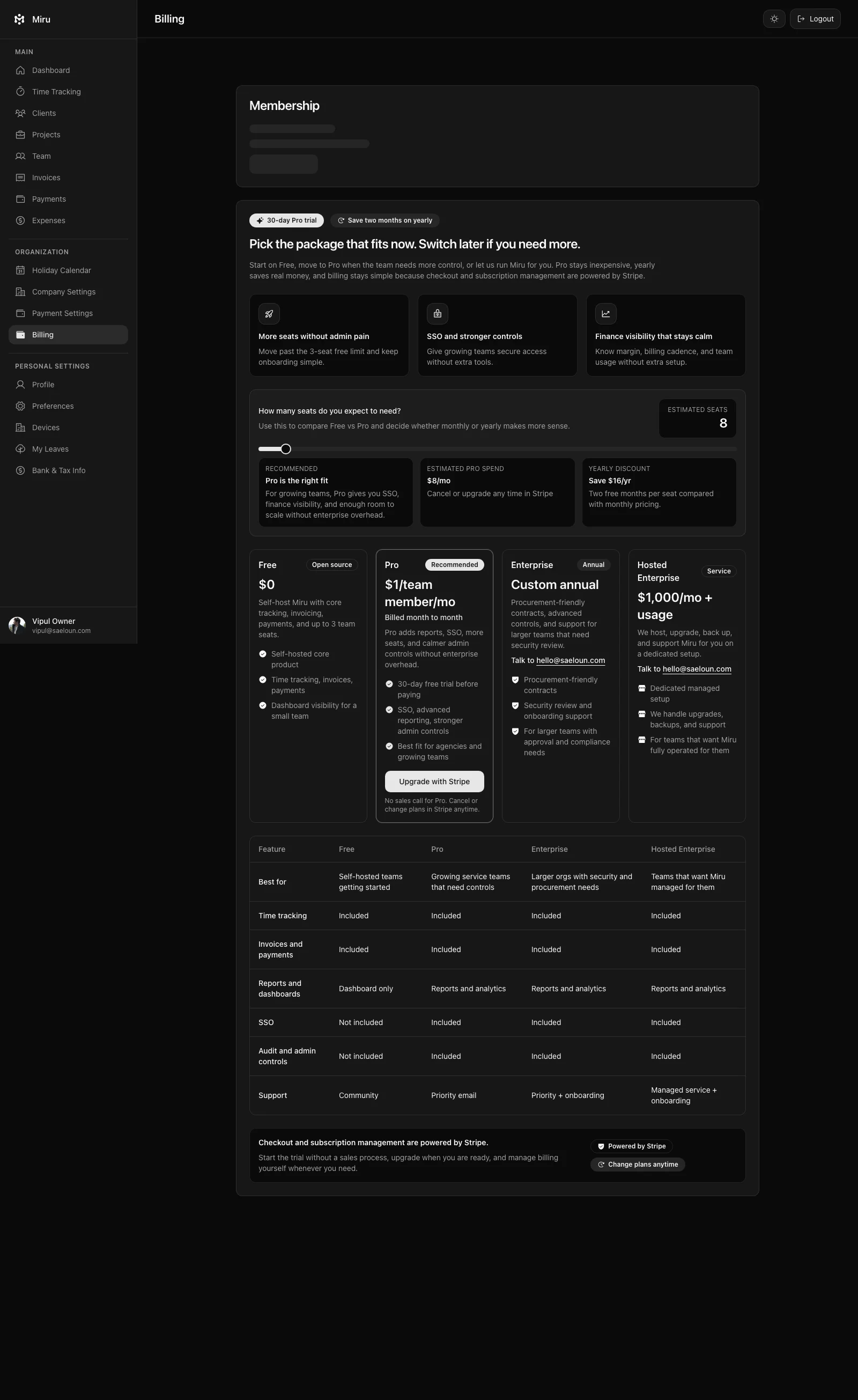
The hall of shame
Slack: $8.75/user/month on Pro. A 100-person company pays $10,500/year for a chat app. The marginal cost to Slack of your 100th user: pennies. The incremental storage and compute is negligible. But $8.75 it is.
Harvest: $10.80/user/month. A 100-person company pays $12,960/year to track time and send invoices. Time tracking is a CRUD app with a timer attached. There’s nothing happening on Harvest’s servers that justifies $130/user/year.
Jira: $8.15/user/month on Standard (for 100+ users). A 100-person engineering team pays $9,780/year for a project management tool that most of them actively dislike. And yet they pay, because migrating off Jira is even worse than using Jira.
Toggl Track: $9/user/month on Starter. $10,800/year for 100 users. For a stopwatch. With reports. Toggl doesn’t even include invoicing.
Monday.com: $10/user/month on Standard (minimum 3 seats). A 100-person team: $12,000/year. At least Monday gives you project management, but the time tracking is bolted on.
The math at scale
Let’s look at a real scenario. A 100-person company that needs time tracking and invoicing.
| Tool | Monthly Cost | Annual Cost |
|---|---|---|
| Harvest | $1,080/mo | $12,960/yr |
| Toggl Business | $1,800/mo | $21,600/yr |
| Monday.com | $1,000/mo | $12,000/yr |
| Miru Pro | $100/mo | $1,200/yr |
A 100-person company on Harvest pays $12,960 per year. On Miru Pro: $1,200. That’s a 91% difference for the same features. Actually, for more features — Miru includes expense tracking, a CLI, and an API at every tier. Harvest doesn’t have a CLI at any tier.
The difference — $11,760 per year — is a junior developer’s salary in many markets. You’re choosing between a person who builds things and a time tracking subscription. The time tracking subscription should lose that fight every time.
Why per-seat pricing persists
Simple: because VCs demand it.
Per-seat pricing is revenue growth on autopilot. Customer grows? Revenue grows. No upselling required. No new features needed. Just more seats, more money. Investors love it because it’s predictable and it scales linearly with customer success.
The problem is that it’s misaligned. It punishes you for hiring. Every new team member comes with a hidden SaaS tax — $50-200/month across all your per-seat tools (Slack + Jira + Harvest + Zoom + Notion + …). For a 100-person company, that SaaS tax is easily $100,000+ per year.
The vendor’s costs don’t scale linearly with your headcount. Infrastructure costs scale with usage — API calls, storage, compute. A team of 100 people doesn’t generate 10x the server load of a team of 10. It might be 2-3x. But the pricing is 10x.
The alternative
Charge based on what actually costs money: usage, features, or a flat rate. Or, if you must charge per user, make it so cheap that it doesn’t matter.
That’s what we did with Miru. $1 per member per month. Not $10. Not $8.75. One dollar. Because the marginal cost of serving one more user is roughly nothing, and we think the price should reflect that.
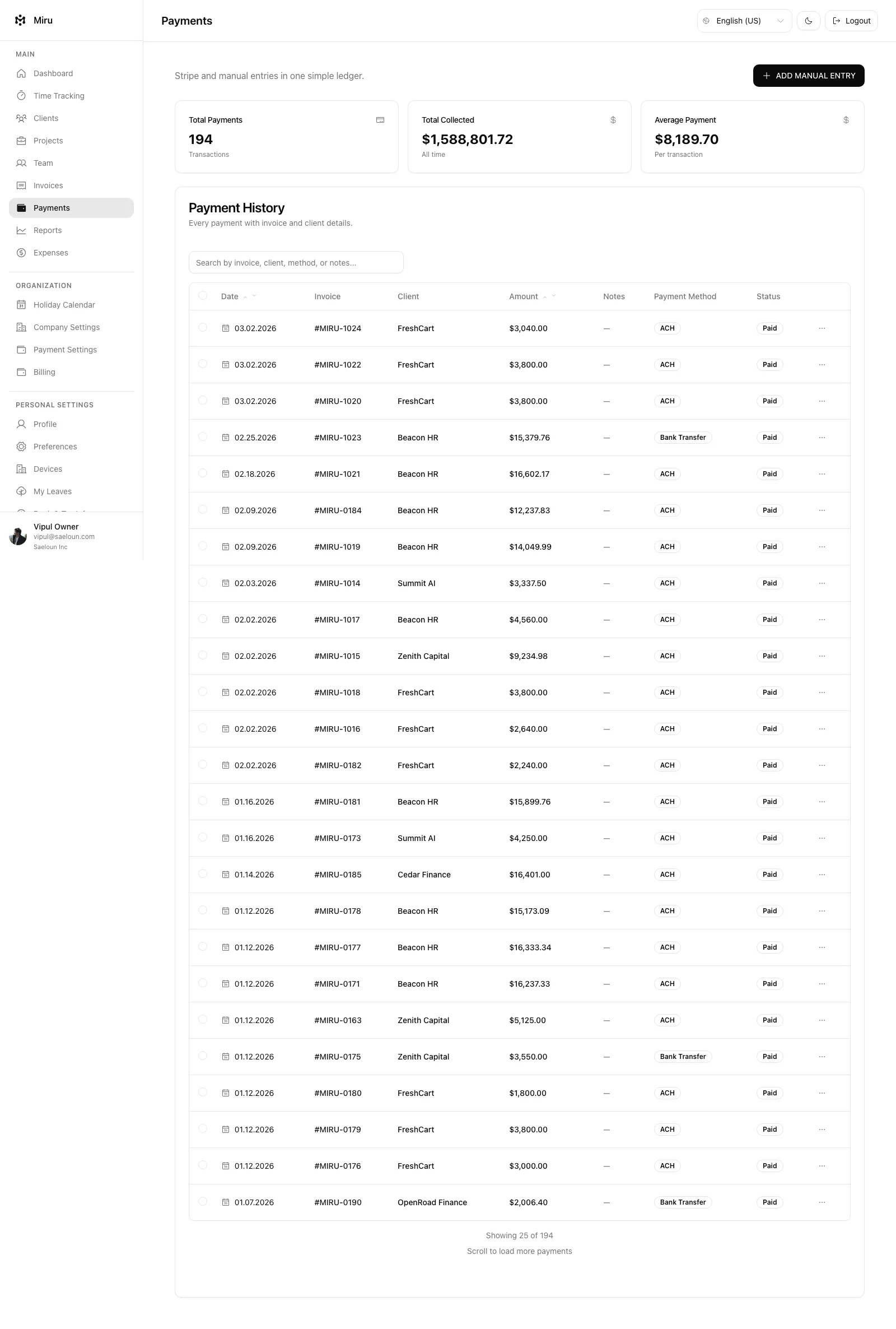
At $1/member, adding your 51st employee costs you $12/year. Not $130 (Harvest). Not $108 (Toggl). Not $97.80 (Jira). Twelve dollars.
And if you have 5 or fewer people? Free. All features. No credit card. No trial. No “Starter plan” with half the features missing.
The escape plan
If your company is paying per-seat prices for tools that should be cheap:
- Audit your SaaS stack. Add up every per-seat cost across every tool. The number will make you uncomfortable.
- Calculate the real cost per employee. Not just salary and benefits — the full SaaS overhead per head.
- Switch to tools that don’t penalize growth. Miru for time tracking. Cal.com for scheduling. Plausible for analytics. There’s an alternative for almost everything.
Your tools should get cheaper as you grow, not more expensive. That’s how economies of scale are supposed to work. Per-seat SaaS broke that contract.
Time to renegotiate. Start with Miru — $1/person or self-host for free.
Hard Stop
If you agree, build this way. If you disagree, test the opposite and measure the real cost.
Start with Miru or read the docs.
Vipul A M
Co-founder at Saeloun. Building Miru. Rails contributor. Shipping from Pune, India.
Read next
You're Paying 10x Too Much for Time Tracking
A 50-person team on Harvest pays $600/month. On Miru Pro, that's $50. Here's the math on why per-seat pricing is a scam.
Why We Charge $1 Per Person (And Why Everyone Else Charges 10x More)
Per-seat pricing at $10-15/person is a racket. Here's the math behind Miru's $1/member pricing and why it works.
Why We Don't Do Annual Contracts
No annual lock-ins. No discounts for commitment. If the product is good, people stay. If it's not, no contract will save you.
Put it to work
Run one cleaner billing cycle in Miru.
If this article is about tracking time, billing clients, comparing tools, or automating work, Miru is the product version of that idea. Start for $1/member, invite the team, and send the next invoice from tracked work.
What you get
- Time tracking, invoices, expenses, and payments in one place.
- $1 per member per month. Free if you self-host.
- Open source, with CLI, API, MCP, and self-hosting paths.
The article is the argument. Miru is the workflow.
Track the work, approve the hours, send the invoice, and get paid without bolting together three separate tools.